Blog
Practical, science-backed guides on training, recovery, sleep, and building habits that actually last.

Training
7 min

How to Train for the Tokyo Marathon
The 2027 Tokyo Marathon is on Sunday, March 7. The course drops about 40 meters in the first six kilometers and is close to flat after that, so control the downhill start. Cut-offs run on clock time, which leaves back-corral runners 6.5 hours, and a large eastward time shift takes most of a week to adapt to, so arrive early.
Training
6 min

How Accurate Is Apple Watch VO2 Max, Really?
Apple Watch typically reads several mL/kg/min below a laboratory test, and the error has a direction: it flatters unfit people and understates fit ones. Two independent validations found mean underestimation of 4.51 and 6.07 mL/kg/min. Treat the number as a trend line for yourself, not a score to compare against anyone else.
Training
7 min

Does Sleep Affect Running Performance? What the Numbers Show
Sleep changes running performance by roughly 3% in controlled studies: one sleepless night cut 30-minute treadmill distance by about 3%, and three nights of extra sleep made endurance athletes about 3% faster. Athletes rated the effort the same either way, so short sleep slows you down without feeling any harder.
Training
7 min

When Does Running Get Easier? What Changes, Week by Week
For most beginners running three times a week, breathing on easy runs improves within three to four weeks, the same pace feels lighter by weeks six to ten as running economy improves, and tendons and bone need three months or more. Because the lungs adapt long before the legs, add distance by plan, not by how good your breathing feels.
Training
7 min

Missed a Week of Running? What to Do Next, and What Not To
After a missed week of running, do not make up the lost runs: rejoin your plan where the calendar says, keep the first few runs easy and slightly shorter, and keep your next long run within your longest of the last 30 days. Two weeks off cost trained runners only about 4% of their VO2 max.
Training
7 min

Lactate Threshold in Running: The Pace That Decides Your Race
Lactate threshold is the fastest pace you can hold before lactate builds up faster than your body clears it, roughly the pace you could race for about an hour. In a classic study it predicted race times from 3.2 km to the marathon better than VO2 max. A 30-minute solo time trial estimates it without a lab, to within about 8 beats per minute.
Sleep
7 min

How to Fix a Wrecked Sleep Schedule, One Hour at a Time
To fix a sleep schedule that has drifted late, pick a target wake time and move toward it by about an hour a day, with bright daylight soon after waking and dim evenings. The body clock advances roughly an hour a day at best, so a three-hour drift takes most of a week. Staying up all night does not reset it; it only adds sleep debt.
Training
7 min

How to Train for the Seville Marathon
The 2027 Seville Marathon is on Sunday, February 21, on a flat, sea-level course. From October you have about 20 weeks: plan a lighter holiday week, peak in January, taper in February, set your goal conservatively from a half marathon, and start slower if race day turns mild.
Training
8 min

Side Stitch When Running: Why It Happens and What Helps
A side stitch is a sharp pain under the ribs that about 70% of runners get in a given year. The best evidence points to irritation of the lining of the abdominal wall, not an oxygen-starved diaphragm. Avoid big meals and sugary drinks in the two hours before a run, and if one hits, slow down until it eases. Pain that persists after you stop is not a stitch.
Training
7 min

How Long to Train for a 5K, 10K, Half Marathon or Marathon
From a comfortable 5K base, a half marathon usually takes 12 to 14 weeks of training, and five to six months from no running at all. A 5K takes about nine weeks from zero, a 10K six to eight weeks more, and a marathon about 16 weeks on top of a solid base. Your tendons and bones, not your cardio, set the pace.
Training
7 min

Running Again After Years Off: What Comes Back and What Doesn't
After years off, assume you are starting close to scratch: detraining studies only cover weeks and months, and a study that looked for a lasting endurance memory in muscle found none after nine months. Your breathing recovers within weeks, but tendons need more than 12 weeks of loading, so rebuild by time and effort, not old paces.
Product
5 min

Health Data Not Showing on iPad? Why, and How to Fix It
The Health app on iPad records very little itself: your Apple Watch pairs with your iPhone, and the iPad gets a copy through iCloud. If it is empty or behind, check that Sync with iPad and Sync with iPhone are both on, that both devices use the same Apple Account, and that both are online and up to date. Never delete data on the iPad to reset it: deletions sync to every device.
Training
7 min

Tempo Run vs Intervals: What Each One Actually Trains
Tempo runs are sustained, comfortably hard efforts near lactate threshold that train the pace you can hold; intervals are harder repeats near your maximum that raise your aerobic ceiling. The shorter the race, the more intervals matter; the longer it is, the more threshold work does.
Sleep
7 min

Why Your Sleep Gets Worse on Weekends (and on Sunday Night)
Weekend sleep usually gets worse because the weekend moves your sleep later while your body clock lags behind. In one study, sleeping in by about three hours on two mornings delayed the melatonin rhythm by 42 minutes, which is why Sunday night is hard. Extra sleep is not the problem: keep your wake time within about an hour and add sleep at the front instead.
Training
7 min

The Run-Walk Method: Why Walking Breaks Are Not Cheating
The run-walk method alternates running with short, planned walks from the start of a run or race. In a randomized marathon study it produced similar finish times to running only, with less muscle pain and fatigue, though it did not reduce the load on the heart and does not clearly save energy.
Sleep
7 min

REM vs Deep Sleep: Which One Actually Matters More?
Neither REM nor deep sleep is more important overall. When a night runs short, the body protects deep sleep first and loses REM from the final hours, but REM is paid back on recovery nights and lower REM over years is associated with higher mortality in older adults. The practical lever is enough total sleep at a steady time, which protects both stages.
Training
6 min

Return to Running After Injury: What Your Data Can Tell You
When and how fast you return to running after an injury is a decision for your physiotherapist or doctor. Your heart and lungs recover faster than tendon and bone, so feeling fit is not proof of being ready, and your old long run is a big jump after weeks off. Use heart rate, load and a written pain log as a record for your clinician, not as a green light.
Training
7 min

How to Get Faster at Running: What Actually Works, in Order
Most runners get faster by running more, mostly easy, for months without interruption, then adding one or two harder sessions a week. World-class distance runners do at least 80% of their running at low intensity, and in a study of 85 elite runners, total distance run had large effects on performance.
Training
7 min
How to Start Running When You Are Out of Shape
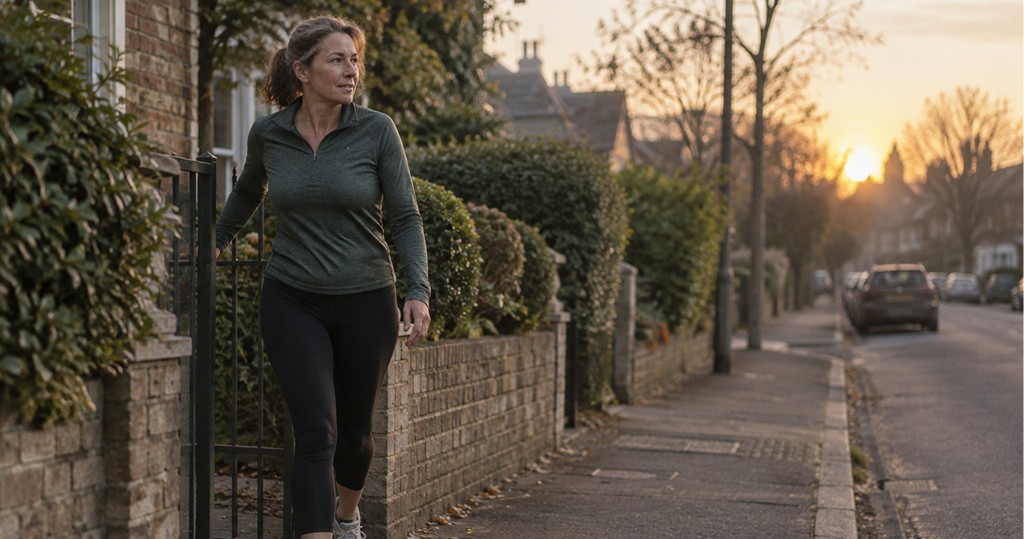
To start running when you are out of shape, run three times a week on non-consecutive days, build each session from short running intervals inside a walk, and keep the running easy enough to speak a full sentence. Most people reach a continuous 30 minutes in eight to twelve weeks. Novice runners are injured about twice as often per hour as experienced ones, so the plan that works is the one you can repeat, not the one that feels impressive in week one.
Training
6 min

80/20 Running: Why Most of Your Runs Should Feel Easy
80/20 running means doing about 80% of your running easy and 20% hard, a pattern observed in elite endurance athletes. In recreational runners the evidence for the exact ratio is small and mixed, but keeping easy days truly easy lets you run more and keeps your hard sessions worth doing.
Recovery
7 min

Apple Watch heart notifications: what each one actually detects
An Apple Watch low heart rate notification only means your heart rate stayed below a threshold you set for 10 minutes while you were inactive. For many fit people that is normal; symptoms such as dizziness, fainting, chest pain or breathlessness are what need medical care. An irregular rhythm notification is a reason for a proper ECG, and no notification is not proof of a normal rhythm.
Training
7 min

How to Train for the Valencia Marathon
The 2026 Valencia Marathon is on Sunday, December 6, on a flat course at sea level. Because there are no hills to slow you down, the biggest risk is starting too fast, so train goal pace inside your long runs, aim for even splits, taper for two to three weeks and start slower if race day turns warm.
Sleep
6 min

Slept eight hours and still exhausted? What to check
Eight hours measures how long you were in bed, not whether the sleep did its job. Broken sleep produces the same daytime symptoms as short sleep, timing matters as much as length, and the first hour after waking is unreliable by design. If you have felt exhausted for a few weeks and cannot say why, that is a question for a doctor rather than for a sleep chart.
Training
7 min

Why Running Feels So Hard at First, and Why Your Heart Rate Soars
A high heart rate on early runs is normal for most healthy beginners: even a slow jog is vigorous exercise for a body that has not adapted to running yet. Slow down until you can talk in full sentences, walk when you need to, and expect the same pace to feel easier within a few weeks. Chest pain, dizziness or an irregular heartbeat are reasons to see a doctor.
Training
7 min

The 10% Rule in Running: What Actually Predicts Injury
The 10% rule has almost no evidence behind it: in the only randomised trial, runners who followed it got injured as often as runners who did not. A 2025 study of 5,205 runners found a better warning sign, a single run much longer than your longest of the previous 30 days. After an injury that longest run has reset, so rebuild from your recent data and let your physiotherapist decide when you start.
Training
7 min

How to Train for the Behobia-San Sebastián
The 2026 Behobia-San Sebastián is on Sunday, November 8: 20 km from Behobia (Irun) to Donostia-San Sebastián with 192 meters of climbing and its steepest ramp after halfway. Pace the climbs by heart rate rather than watch pace, taper for about two weeks, and plan the train and shuttle to the start in advance.
Sleep
6 min

Sleep Tracking Made My Sleep Worse: What Helps
Orthosomnia is the pattern where chasing a perfect sleep score makes sleep worse. The score itself is not what does the damage: it changes what you believe about the night, and the behaviour that follows, above all spending longer in bed to improve the number, is what costs you sleep. Change the response before removing the device, and read weekly trends instead of single nights.
Training
7 min

How to Train for the New York City Marathon
The 2026 New York City Marathon is on Sunday, November 1. Train for it like any marathon, then add hills late in long runs, relaxed downhill practice and a rehearsal of the long race morning, because most of the course's climbing is on bridges and the hardest ones come after mile 15. Pace by effort rather than by watch pace, and taper for about two weeks.
Sleep
6 min

Is My Sleep Graph Normal? Reading a Normal Sleep Cycle Graph
A normal sleep graph is a repeating shape rather than a tidy one: cycles of roughly 90 to 110 minutes, deep sleep stacked in the first half, REM blocks lengthening toward morning, and short gaps of wake throughout. The healthy range is far wider than most people assume. In a reference sample of 206 healthy adults, taking over 30 minutes to fall asleep and a sleep efficiency below 80 percent both fell inside one standard deviation of normal.
Recovery
7 min

Apple Watch Blood Pressure Alerts: What They Really Mean
An Apple Watch hypertension notification means the optical heart sensor found patterns linked to high blood pressure across a 30-day window. It is not a blood pressure reading or a diagnosis. In Apple's own study it flagged 41% of people who had hypertension, so a notification deserves a week of cuff readings and a doctor's opinion, and silence proves nothing.
Recovery
7 min

Your watch has no idea you were ill: what to ignore
Your watch has no way to know you were ill, so a sick week reads as a week you chose not to train. Training load and cardio fitness estimates drop mostly because data is missing, and they settle once the empty days roll out of their windows. Resting heart rate and HRV are the exception: if they are still off your baseline, that is your body telling you something real.
Recovery
7 min

What a recovery score can and cannot know
A recovery score is a summary of your overnight autonomic state, and heart rate variability supplies most of it. That is a real read on how your nervous system handled the last day, but it is not a measurement of muscle damage, stress load or fitness, and it recovers on a different timeline from all three. Trust it when it moves a long way off your own baseline, not when it shifts a few points.
Sleep
6 min

Why Your Watch Logs Wake-Ups You Don't Remember
Waking briefly many times a night is normal: healthy adults average around 14 arousals per hour in the sleep lab. You do not remember them because an awakening has to last roughly four minutes before it registers in morning memory. Your watch is not inventing them, and Apple's own validation suggests it under-counts true wake time rather than over-counts it.
Recovery
8 min

Is it worth wearing your Apple Watch to sleep?
Wearing an Apple Watch to sleep is what makes recovery data possible at all: HRV, resting heart rate, wrist temperature, blood oxygen and breathing rate are all measured overnight. Research on consumer trackers found about five nights a week are needed before a weekly average is reliable, and the nights people skip are almost never random ones. The only night worth losing is the night the watch itself stops you sleeping.
Sleep
6 min

How much deep sleep do you actually need?
In healthy adults, deep sleep (N3) is commonly put at about 25 percent of total sleep time, and that share falls steadily with age. No major sleep guideline sets a target for deep sleep: the recommendations cover total duration, seven or more hours a night for adults aged 18 to 60. Treat your deep sleep figure as a trend to watch rather than a number to hit.
Recovery
6 min
Why Is My HRV So High, and Is That Actually Good?
A high HRV reading is not automatically a good one. It can reflect a genuinely stronger parasympathetic baseline, but it can equally be arithmetic from a slower heart rate that night, an artifact from a single misread beat, or, in overreached athletes, a sign that training has gone too far. Read the distance from your own usual range, over a week rather than a night, and read it alongside how you actually feel.
Sleep
7 min

How to Get More Deep Sleep (And What Actually Works)
Deep sleep cannot be added directly. It is produced by the sleep pressure that builds while you are awake and is spent in the first hours of the night, so almost everything that raises it happens before you get into bed: a long enough day awake, a regular bedtime, no long late nap, a room that is not too warm, and nothing sedating in your system. Anything applied after you fall asleep is acting on the part of the night with the least deep sleep left in it.
Recovery
6 min

How to Actually Improve Your HRV (And What Does Nothing)
Only a few things reliably raise heart rate variability over months: regular aerobic training, consistent sleep, and less alcohol. Slow breathing raises HRV impressively while you do it, but the evidence for a lasting change in your resting number is limited. Track a weekly average, never a single morning reading.
Habits
6 min

Are Workout Streaks Good or Bad? How to Build One That Bends
A workout streak is genuinely useful for the first two months of a new routine, when showing up still takes conscious effort, and risky after that if the number starts outranking your body. The fix is not more discipline: it is a streak with a minimum viable version, planned rest that still counts, and no penalty for restarting.
Habits
8 min

Habit Stacking for Exercise: Anchor Training to Your Routine
Habit stacking exercise means anchoring a tiny training action to something you already do without fail, using the format "after X, I will Y". Pick an anchor with a precise ending that survives your worst days, and make the new habit small enough that you would still do it when you feel terrible. Most stacks fail for three reasons: the anchor is vague, the habit is too big for the gap, or you anchored to something you actually skip.
Training
6 min

What Does VO2 Max Mean? And Why It Matters for Longevity
VO2 max is the maximum amount of oxygen your body can use during all-out effort, measured in mL/kg/min. It is one of the strongest known markers of long-term cardiovascular health, not just endurance performance. Your watch estimates it from heart rate and pace rather than measuring it, so treat single readings as noise and the three-month trend as signal.
Sleep
6 min

Sleep Debt, Explained: Can You Really Catch Up?
Sleep debt is the running total of the difference between the sleep your body needs and the sleep it actually gets. You can repay some of it, mostly the recent part, but research shows a weekend of long lie-ins does not undo weeks of short nights. Real recovery comes from a steadier wake time and slightly earlier bedtimes held for a few weeks.
Mindset
7 min

How to Work Out When Tired: Scale It Down, Don't Skip It
On a low-energy day, scale the session instead of deleting it. Cut intensity first, then duration, and keep the ritual (same time, same shoes, same start) intact. Save full rest for the signals that actually call for it: illness, several days of an elevated resting heart rate, or fatigue that keeps getting worse.
Product
6 min

Custom Heart Rate Zones: Why 220 Minus Age Misleads You
The 220 minus age formula was never derived from original research and carries a standard deviation of 10 to 12 beats per minute, enough to place you a full training zone away from your real physiology. Anchoring zones to a measured maximum heart rate, a lactate threshold, or cycling FTP fixes every metric built on top of them. FitWoody added custom heart rate and cycling FTP zones in version 2.6.
Habits
6 min

How to Build Workout Habits That Survive a Bad Week
Building a workout habit takes a median of roughly 59 to 66 days, but individual times in the research range from 4 days to 335, and exercise forms habits more slowly than simpler behaviours. What predicts success is not motivation but frequency, simplicity, a stable context and finding the sessions tolerable. Around four sessions a week for six weeks is the studied minimum for automaticity, though fewer sessions you actually keep beat more that you abandon.
Habits
6 min

Why Workout Motivation Fails (And What to Build Instead)
Workout motivation fails because motivation is a feeling, and feelings change with sleep, stress, hormones and weather. What actually sustains training is an identity you act from, an environment that makes starting easy, and a plan with a smallest possible version. Build for the tired version of yourself, not the inspired one.
Recovery
6 min

Wrist Temperature and Sleep: What Your Night Data Means
Wrist temperature measured during sleep does not report your body temperature. It reports how far last night sat from your own recent nightly average, usually in tenths of a degree, and it can drift before you consciously feel run down. A single odd night is noise; a run of nights moving in the same direction alongside other changes is a signal worth respecting.
Training
12 min

Training Load Explained: What It Measures and What It Can't
Training load puts a number on the stress your training creates, splitting into acute load (your last 7 days) and chronic load (your rolling 3 to 6 week average). The ratio between them, often shown as your load ratio, is a useful lens but much weaker evidence than its popularity suggests. The durable idea underneath is simpler: your body adapts to what you repeat, adaptation takes weeks, and sudden jumps outrun it.
Sleep
6 min

How Accurate Is Wearable Sleep Tracking, Honestly?
Wrist sleep trackers detect sleep with roughly 95 percent sensitivity but detect wakefulness with only about 50 percent specificity, so quiet time in bed reads as sleep. Pooled across 24 validation studies, the typical gap against a sleep lab is around 17 minutes of total sleep time and about 5 percentage points of sleep efficiency. That is good enough to follow your own trend, and not good enough to judge a single night.
Product
6 min

How Adaptive Daily Goals Work (And Why Fixed Ones Fail)
An adaptive fitness goal changes daily based on your sleep, your own recovery baselines and your accumulated training load. It asks for more when you have more, and less when you are depleted. That flexibility is not softness: it is what keeps a habit alive across a whole year instead of three good weeks.
Sleep
6 min

Your Watch Says You Slept Badly But You Feel Fine
A sleep score summarises how long and how continuously you slept. How you feel is that night plus sleep inertia, mood and expectation. On a single morning, trust how you feel. Over weeks, trust the score, because memory of sleep is unreliable and the data is not.
Training
6 min

Low Cardio Fitness on Apple Watch: Why, and How to Raise It
A low cardio fitness alert means your estimated VO2 max sits in the lowest quintile for your age and sex. It is a submaximal estimate from outdoor walking or running, carrying an error band of roughly five ml/kg/min either way, and the most common cause of a wrong reading is an undeclared heart-rate-limiting medication. It responds to consistent aerobic training over months, not weeks.
Training
6 min

Heart Rate Training Load: Why the Same Run Costs More
Heart rate training load measures the internal cost of a session: how hard your cardiovascular system worked, and for how long. Two people can run the same 45 minutes at the same pace and pay very different prices, and the same run can cost you more today than it did last Tuesday. That internal number, not the distance, is the one worth using to plan tomorrow.
Sleep
6 min

Sleep Consistency Beats Duration: Why Timing Wins
Sleep consistency, meaning your sleep and wake times land in a similar window most days, tracks health outcomes more closely than total hours slept. A UK Biobank study of nearly 61,000 people found sleep regularity was a stronger predictor of mortality risk than sleep duration. The most practical lever is a fixed wake time, because bedtime tends to follow it.
Sleep
6 min

Training After Bad Sleep: How to Decide If You Should Go
After one bad night you can usually still train, just not the session you planned. Poor sleep mainly changes how hard the work feels and how sharp your coordination is, so keep the session easy and cut the volume rather than cancelling. Skip entirely when bad nights are stacking up, when you feel unwell, or when the session is high-skill and high-risk.
Sleep
6 min

How Sleep Scores Are Calculated, and What They Miss
A sleep score is a weighted summary, not a measurement. It combines how long you slept, how broken the night was, the estimated share of deep and REM sleep, and your timing, into a single number. Because the stage estimates are inferred from movement and heart rate rather than brain activity, the score is far more useful as a trend against your own history than as a grade for one night.
Training
6 min

Zone 2 Training, Explained: Why Easy Days Make You Faster
Zone 2 training is easy aerobic work you can sustain for an hour or more while still talking in full sentences, and it makes you faster because it builds your aerobic base at a cost your body can absorb several times a week. Find it with the talk test and your own measured zones rather than the 220 minus age formula, which carries an error of roughly 10 to 15 beats per minute. Aim for most of your weekly sessions easy and one or two genuinely hard.
Recovery
6 min

How Long Does Alcohol Affect HRV and Recovery?
Alcohol lowers HRV and raises resting heart rate on the night you drink, with the largest effect in the first three hours of sleep and a size that scales with the dose. For most people a normal evening costs one night and a heavy one can cost two or three, so the popular four to five day figure is not supported for ordinary drinking. Your own baseline is the only way to know your personal recovery time.
Recovery
6 min

Why Did My HRV Drop? The Usual Causes, Ranked
An overnight HRV drop is most often explained, in this order, by alcohol, short or broken sleep, hard training in the last 48 hours, an infection you cannot feel yet, unresolved stress, or a change in how the measurement was taken. A single low morning is normal variation and not worth acting on; several days below your own baseline is.
Mindset
7 min
All or Nothing Thinking in Fitness: Why Perfect Ruins Progress
All or nothing thinking in fitness is treating a session as valid only if it matches the plan exactly. It is the most reliable way to end a habit that was working. The fix is partial credit: a shorter or easier session still counts physiologically, and counting it is what keeps people training for years.
Recovery
11 min

What Does HRV Mean? Reading Your Number Without Panic
HRV (heart rate variability) is the variation in time between consecutive heartbeats, and it reflects how far your nervous system is leaning toward recovery rather than stress. The number is not comparable between people or even between apps, because devices use different metrics (Apple Watch reports SDNN, many others RMSSD). The useful signal is a 7-day trend against your own baseline, read alongside resting heart rate and other overnight signals, not any single morning's reading.
Recovery
6 min

Overtraining Symptoms: Overreaching or Just Tired?
Normal training fatigue clears in a day or two, functional overreaching is a deliberate dip that pays off after a short recovery, and true overtraining syndrome keeps performance down for months. What separates them is not how bad one morning felt, it is whether resting heart rate, HRV, sleep quality, mood and performance at the same effort have all moved the same way for a week or more.
Recovery
6 min

Your Baseline Beats Any Normal HRV Range
There is no single normal HRV range that applies to an individual: in a study of roughly 149,000 people, age and sex together explained only about a fifth of the differences in HRV between individuals. The only comparison that carries real information is your own rolling baseline, built from weeks of your own overnight data, telling you whether today is above, below or in range for you.
Recovery
7 min

What Your Resting Heart Rate Trend Is Telling You
A rising resting heart rate trend means your body is working harder at rest than it usually has to, most often because of illness, alcohol, poor sleep, sustained stress, or training load that has outpaced recovery. One high morning is noise; a week sitting above your own baseline is a signal worth acting on.
Sleep
6 min

Sleep Stages Explained: What Deep and REM Actually Do
A night of sleep runs in cycles of roughly 90 minutes through core (light), deep and REM sleep. Deep sleep concentrates in the first half of the night and handles physical repair, REM builds toward morning and handles memory and emotion. Chasing a specific deep sleep percentage is a poor goal, because deep sleep is protected when your night is short, which means a bad night can produce a better-looking percentage than a good one.